When 6 Years Becomes 2: The Depreciation Gap Reshaping Energy Infrastructure
TSMC's warning + Nvidia's depreciation + CME's blackout = Frontier of Energy Valuation

It was not so long ago that I used to confuse chips with chifles and the only way to set them apart was that the latter contain more protein than the former. Nowadays it is clear in the current day and age of AI what chips we talk about, especially when energy, data centers, and futures trading are involved.
This special deep dive is adjacent of our typical topics and converges on valuations and infrastructure. Time for a deep dive, yès or yés?
Context: The Intersection of Chips, Accounting, and Energy
We’re witnessing an unprecedented convergence of three critical forces: the explosive growth of AI computing, the physical limits of semiconductor efficiency, and the constraints of energy infrastructure. At the center of this convergence sits Nvidia, whose datacenter GPUs power the AI revolution but whose accounting practices have sparked debate about how we value both the technology and the energy systems that sustain it.
Nvidia depreciates its datacenter hardware over 5 to 6 years, as disclosed in its SEC Form 10-Q filings. Yet CEO Jensen Huang regularly proclaims that “Moore’s Law is dead” and that GPUs are improving at rates that dwarf traditional semiconductor scaling. This creates a fundamental tension: if products become obsolete faster than their accounting lifespans suggest, then current earnings may be overstated, replacement cycles underestimated, and future capital needs miscalculated.
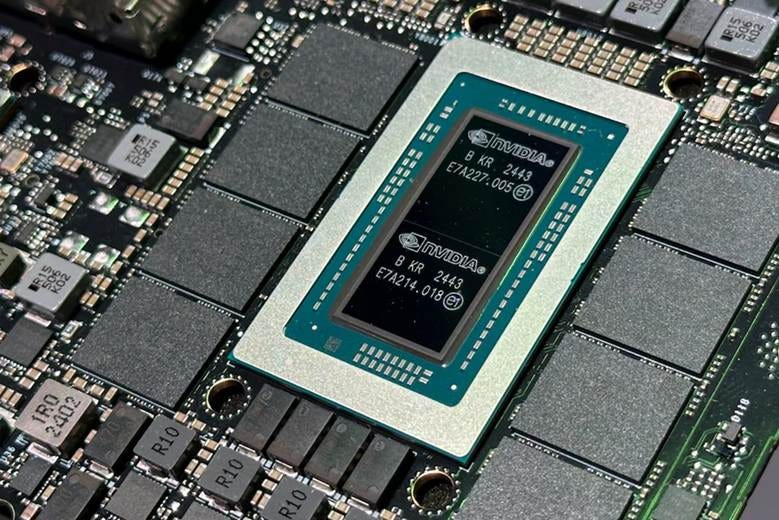
This isn’t merely an accounting curiosity. The depreciation assumption ripples through the entire value chain, from datacenter capex planning to power demand forecasting to natural gas infrastructure investment. When chips shown on Figure 1 turn over faster, power consumption patterns shift. When efficiency improvements slow, as TSMC has warned, energy demand accelerates. And when datacenters start experiencing blackouts, the entire AI growth narrative confronts physical reality.
The Burry Analysis: Fragility in Concentration
Michael Burry, famous for predicting the 2008 financial crisis, has raised concerns about market fragility and over-concentration in AI equities. While Burry hasn’t publicly accused Nvidia of accounting fraud, his framework highlights the analytical fragility inherent in the depreciation-versus-obsolescence discrepancy. Fellow Texas A&M Aggie and guest of the Joe Rogan Experience Podcast Stephen Findeisen, better known as ‘Coffeezilla,’ released a great video days ago.
The impact of this perspective is significant because it reframes the question. This isn’t about whether Nvidia is cooking its books, it’s about whether the entire ecosystem is pricing in assumptions that don’t align with physical and economic reality. When depreciation schedules assume six-year useful lives but generational improvements happen every 18-24 months, the gap between accounting fiction and operational truth widens.
For energy finance, this matters enormously. If datacenters plan replacement cycles based on accounting depreciation rather than actual obsolescence, they systematically underestimate future power demand. Each replacement cycle brings newer, often more power-hungry chips. The H100 consumes roughly 700W; its successors won’t necessarily use less. This means the power demand curve could be steeper than current infrastructure projections assume.
TSMC’s Warning: The Self-Aware Manufacturer
Weeks before broader market discussion intensified, Taiwan Semiconductor Manufacturing Company issued a crucial statement about energy efficiency and fabrication limits. TSMC acknowledged that semiconductor scaling is hitting power constraints and that future gains will come increasingly from system-level efficiency rather than raw transistor scaling. Most critically, they warned that energy efficiency improvements are slowing.
This is the “power wall” made explicit by the world’s most advanced chipmaker. TSMC is effectively saying: don’t expect GPU power consumption to fall drastically, even as performance improves. If efficiency gains slow while AI workloads scale rapidly, the relationship between compute demand and power demand becomes super-linear.
The implications cascade through the value chain. Each GPU cluster consuming 400-700W per chip, scaled across datacenters drawing 400-800MW of continuous load, translates to energy demand equivalent to several nuclear reactors per year being added to the US grid alone. The International Energy Agency’s 2024 Data Center Energy Report confirms this trajectory.
For natural gas markets, LNG infrastructure, and power generation assets, TSMC’s warning is a valuation inflection point. If efficiency stagnates, the bullish case for baseload energy infrastructure strengthens dramatically. Conversely, if AI demand proves less durable than anticipated, these same assets risk becoming stranded.
Why Nvidia is Cisco, Not Enron, And Why That Matters for Energy Valuation